
Hotel safety remains an important concern for business travelers. Recent BCD research found business travelers often feel confident in their hotel choices, but safety risks still exist. This guide, informed by insights from BCD Marketplace partner Maiden Voyage, outlines practical steps travelers can take to improve personal safety during hotel stays. Travel teams can reinforce these tips by sharing this guide with employees through their usual communication channels, such as the intranet, email briefings, or pre‑trip resources.
6 hotel safety tips for business travelers
1: Once you are in your room, make security your first priority.
- Use all available locks. If your room has a secondary lock, such as a deadbolt, chain, or security bar, use it whenever you are inside.
- Understand the limits of primary locks. Even when your door is locked, hotel staff may still be able to enter with a master key, or another guest could be mistakenly assigned to your room.
- Consider a portable locking device. Some travelers choose to carry a secondary device, such as a door stop or wedge, to add an extra layer of protection when it is safe and appropriate to do so.
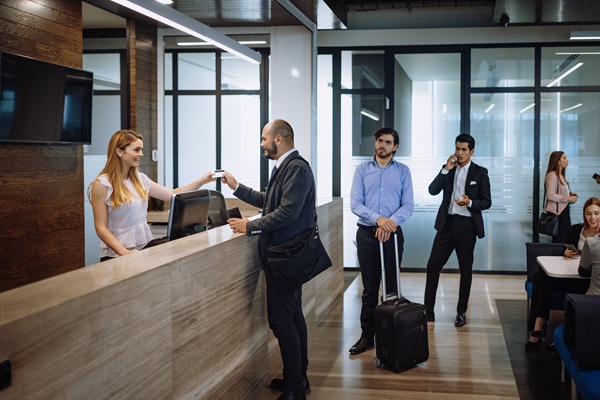
2: Be mindful at check‑in.
Your safety starts before you reach your room. Protect your room number. If check-in staff announce your room number out loud within earshot of others, ask to switch rooms and request that the number be written down discreetly instead.
3: Trust your instincts about room location.
Not all rooms feel equally safe, and that matters.
- Assess the location when you arrive. If your room’s location does not feel right to you, return to reception and ask for an alternative.
- Check all access points. Make sure doors, windows, and any adjoining-room entrances are secure and lockable. If something feels unsafe, request a different room.
4: Set preferences before you arrive.
A little planning can reduce risk. As your company policy and booking channels permit:
- Share safety-related preferences in advance. For example, you might request:
- A non-adjoining room
- A room above the ground floor
- A location close to elevators or away from isolated areas
Hotels cannot guarantee every request, but flagging preferences early can help.
5: Verify before opening the door.
Unexpected visitors should always be checked.
- Confirm unplanned visits. If someone claims to be from maintenance or room service and you were not expecting them, call reception to verify before opening the door.
- Use the peephole first. Even when you are expecting housekeeping or room service, take a moment to confirm who is there.
6: Report safety concerns.
If something does go wrong, you do not have to handle it alone.
- Let someone know. If you experience a safety-related incident while traveling for work, consider informing your employer and or your travel management company, if you feel comfortable doing so.
- Flag hotel issues. Report any safety or security concerns to the hotel so they can be addressed.
- Once your safety is assured, please also report concerns to your managed travel team. Your feedback can help influence future supplier decisions.
Why this matters
Business travelers often move quickly between locations, hotels, and schedules. These small, practical actions can help reduce risk, increase confidence, and ensure travelers feel supported, not just while traveling, but after the trip as well.
All of these hotel safety tips, and more, are included as standard in Maiden Voyage’s traveler safety training courses. For more information on how to arrange a course for your travelers and travel team, contact [email protected].
With thanks to BCD Marketplace partner Maiden Voyage for sharing their expertise and insights on traveler safety.
About Maiden Voyage

Maiden Voyage is your trusted partner for all things inclusive business travel safety. They prepare you and your employees for business travel through a range of travel safety consultancy and training solutions. Their engaging courses, workshops, eLearning and video content are tailored to meet your specific needs, whether that’s focusing on a certain region, specific minority groups or getting everybody up to speed on the latest travel safety advice. What makes them different is that Inclusivity and traveler wellbeing are at the heart of everything that they do.
